I wanted to share this newspaper column that I recently came across with you, because it’s a story that I believe many of us who aspire to rebuilding our book-reading habit will relate to.
The author (Pete McMartin) is a long-time newspaper columnist for the Vancouver Sun – in other words, a professional writer – not the kind of person who’s top of mind when you picture a lapsed book-reader. But McMartin describes a book-reading trajectory that I think will be all too familiar to anyone reading this. It’s one that starts joyfully, with getting lost as a teenager in the “trance-like remove” and the “sing-song sentences” of great writers such as Orwell, Huxley, Tolstoy and Austen, but later makes long stops in the land of guilt and self-loathing as, slowly but surely, starting in the late 1970s in his case as his newsroom ditched typewriters – his work and leisure attention is consumed by all manner of computer-based activities, from early computerized versions of Mahjong, to email, then Google, Netflix, and now, ChatGTP.
Imperceptibly at first, I began to lose my taste for reading. I read newspapers, of course, because I had to. But novels? Biographies? Non-fiction? Histories? They fell away.
The books in my library languished on their shelves. Distraction became a part of my life — surrendering to Netflix bingeing, spending days playing Zelda on the Nintendo Switch my wife bought me to keep me from going insane during the COVID months, monitoring emails and my iPhone obsessively.
However, there’s a hopeful ending to his story and one I think we can all draw some inspiration from. McMartin, in part prompted by recent news stories on the decline in leisure reading, found himself in front of one of his bookshelves and noticing a book by an author whose prose’s “crystalline beauty” had moved him as a young man – Truman Capote.
It struck me then, in front of those accusatory shelves of books, of all the time I had wasted in front of a computer screen’s mesmerizing glow, of the puerile mindlessness I had let crowd out the beauty of books, and the concentration and self-reflection they demand.
But instead of wallowing in the guilt and shame over wasted time, McMartin took the steps that are within all our reach – that inspired me to create this website and to want to build a community to support those of us, like McMartin and so many of us – have allowed our book reading habits to lapse but who want to rebuild them.
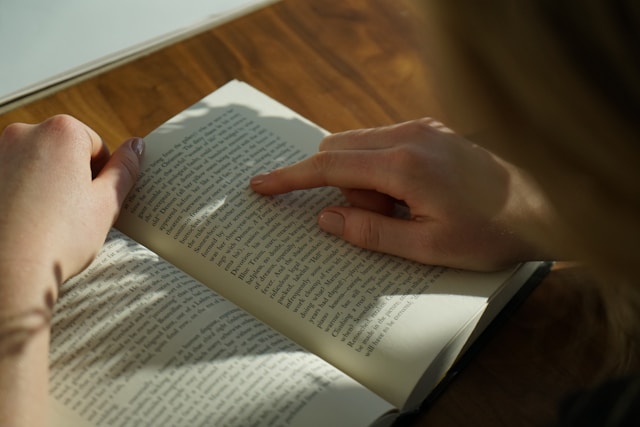
So I opened the book.
I turned to page 1.
I began to read.
Now, I know, I know, I know. You’ve already done this. You’ve done it maybe dozens or hundreds over the past many years that your book-reading habit has lapsed, or you’ve struggled to establish one in the first place.
If opening a book and reading page one is all it took to re-establish your regular book-reading routine, you’d already have done it. And who knows, maybe McMartin won’t finish the book he started, this time.
Regardless, what I hope you take from this story is the knowledge that you’re not alone with this problem – if someone who regularly writes and reads newspaper stories has struggled with maintaining the attention for, and the habit of, reading books, be confident that many others have and do too. The statistics on leisure reading reflect this. I hope that helps you let go of framing this struggle as your personal weakness. As I’ve said elsewhere on this website, I think we need a word that’s the public health equivalent of obesogenic to describe the distraction-saturated environment we find ourselves in in the post-internet world.
What I recommend you do after taking these same steps that McMartin did is use the Tiny Habits approach to rebuilding your reading habit. It’s what worked for me in 2024 and continues to help me today.
To learn about that approach, here’s what you can do: